If chicken rice is the daily dish and nasi lemak is the breakfast wrap, crab is the special-occasion plate. A big mud crab cracked open across half a metre of dinner table, a tide of red gravy or coarse black pepper sauce, and a basket of fried mantou for mopping. This is Singapore at its loudest, messiest and most generous — here's where to do it well.
The three sauces that matter
- Chilli crab — sweet, tangy, slightly spicy red-tomato-and-chilli gravy thickened with egg. Singapore's most famous crab dish.
- Black pepper crab — dry, dark, and unapologetically peppery; the crab is stir-fried in heaps of coarsely-ground black pepper.
- White pepper crab — the more recent invention; subtler, sharper, almost herbal. Light enough that you can finish the whole crab.
You can also order salted-egg crab (curry-leaf, butter, salted yolk), Hokkien-style crab bee hoon (in clear stock with noodles) and steamed crab (clean, plain, sweet) at the same restaurants — the kitchen is set up for it.
Stop 1 · Chilli crab — the icon
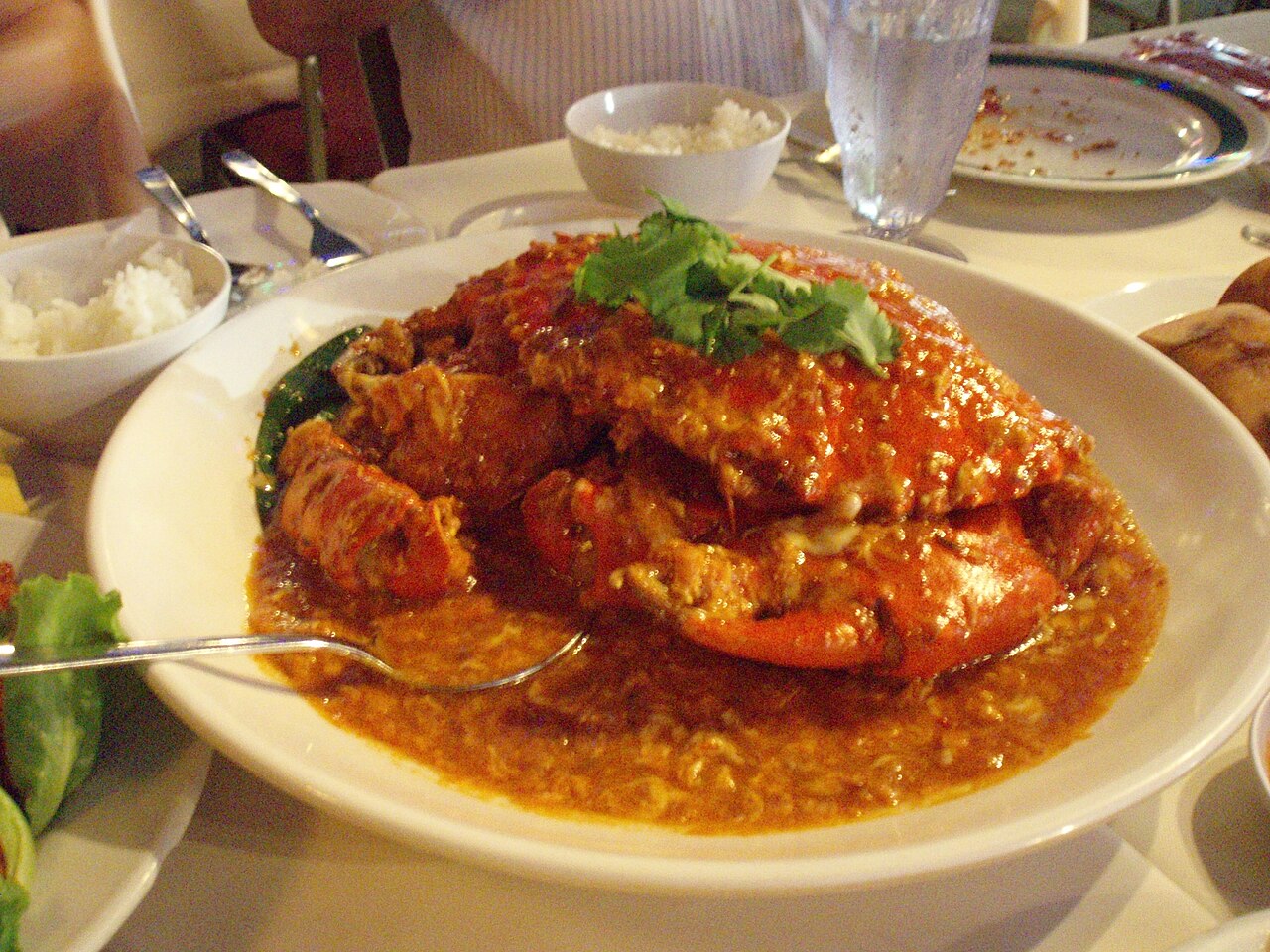
Chilli crab was invented in Singapore in the 1950s by Mdm Cher Yam Tian, who tossed steamed crabs with a thicker, sweeter chilli-tomato sauce out of a pushcart in Kallang. The dish was tweaked into its modern form — egg-thickened, ketchup-deepened, the chilli pulled back so it became more sweet-and-tangy than fiery — in the 1960s by Mr Hooi Kok Wai, one of the so-called "Four Heavenly Kings" of Chinese cooking in Singapore. Today it's the official national dish.
The classic crab institutions:
- Jumbo Seafood — the most recognised name; Riverside Point and East Coast Seafood Centre branches. Tourist-friendly, big portions.
- No Signboard Seafood — the literal-no-signboard original at Geylang grew into a chain; the white pepper crab here is a contender.
- Mellben Seafood at Ang Mo Kio — the heartland favourite, famous for the crab bee hoon as well.
NE5 — Jumbo Riverside Point.Ang Mo Kio MRT ·
NS16 — Mellben at Toa Payoh / Ang Mo Kio.Geylang Bahru MRT ·
DT24 — No Signboard Geylang outlets.
Stop 2 · Black pepper crab — the dry alternative
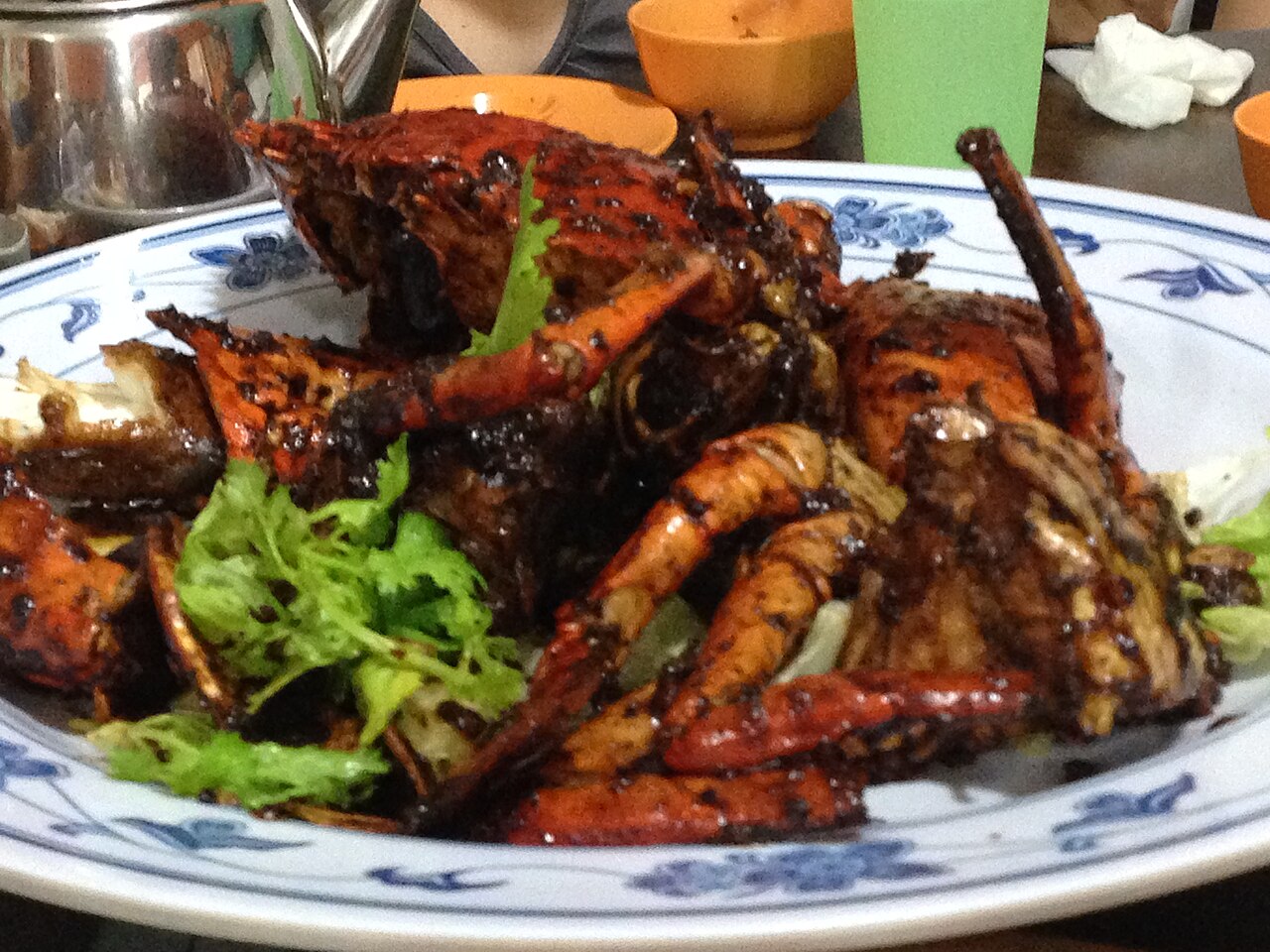
Black pepper crab was the next big Singapore-original. Coarsely-ground black pepper, butter, dark soy, a touch of sweet sauce — tossed in a wok with the crab till the sauce coats every shell. The dryness is the point: no mantou required, and the pepper hangs in the air for hours afterward.
Two of the best:
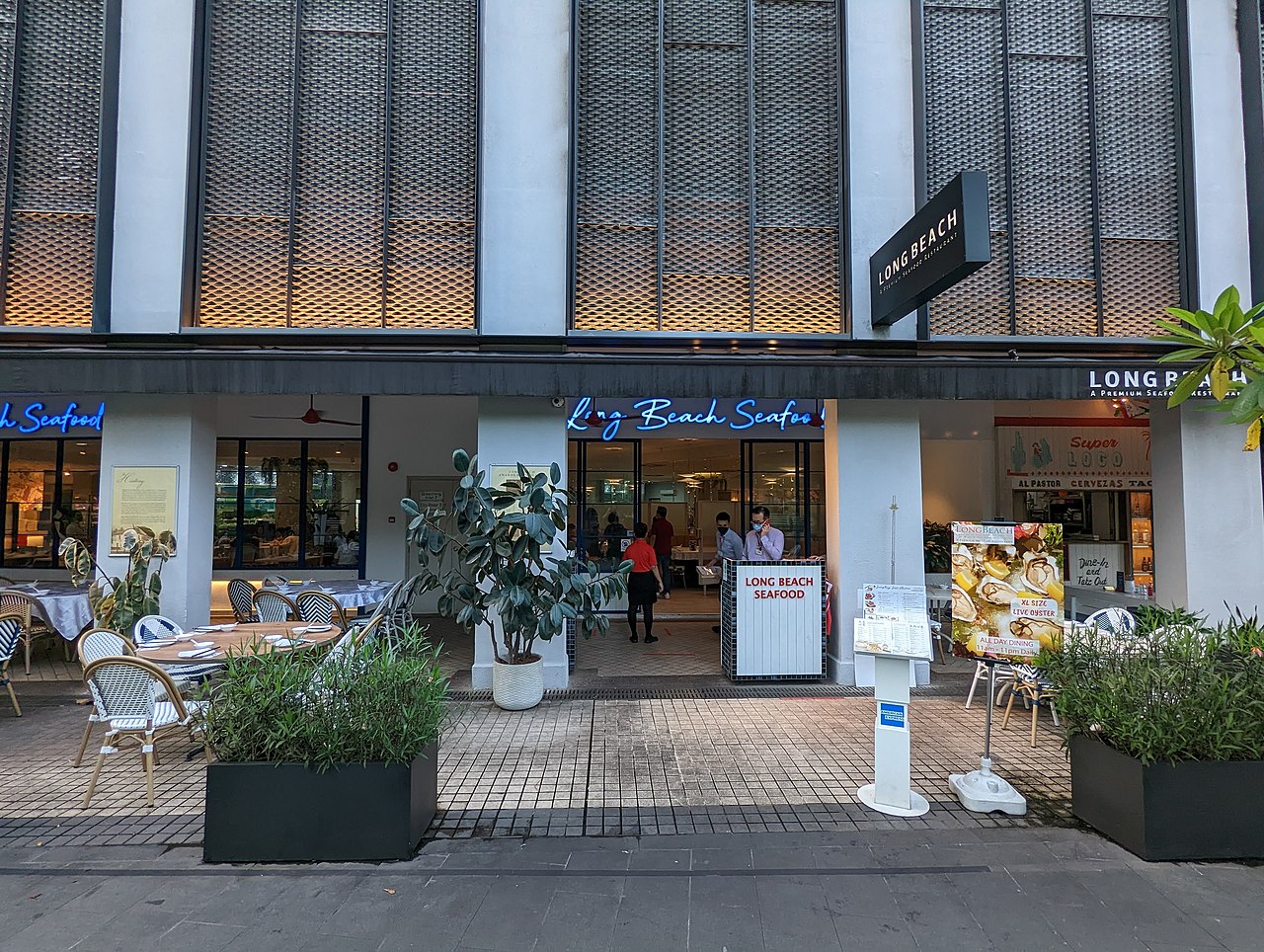
- Long Beach Seafood — the restaurant that popularised black pepper crab in the 1960s. Multiple branches; East Coast Seafood Centre and Dempsey Hill are the headliners.
- JB Ah Meng on Geylang Lor 21 — small, no-frills, and one of the best black pepper crabs in the city.
- New Ubin Seafood — multiple outlets (Hillview, CHIJMES); the pepper crab and the dry-aged USDA black Angus beef are both signatures.
EW5 — bus 401 weekends to East Coast Seafood Centre for Long Beach.Aljunied MRT ·
EW9 — the Geylang restaurants including JB Ah Meng.Bras Basah MRT ·
CC2 — New Ubin CHIJMES.
Stop 3 · White pepper crab & salted-egg crab
White pepper crab is the newer Singapore invention — lighter, headier, dry like the black-pepper version but with the sharper kick of white pepper. No Signboard Seafood in Geylang is the most cited spot. Salted-egg crab — mud crab stir-fried in a salted-egg yolk, butter and curry-leaf sauce — rose to fame in the mid-2010s salted-egg craze and is now a staple. Try it at any of the crab restaurants above, or at Eng Seng Restaurant on Joo Chiat Place.
CC8 — Eng Seng on Joo Chiat Place is about a 10-minute bus ride.
Stop 4 · East Coast Seafood Centre — the seafood village
The East Coast Seafood Centre is a single waterfront strip along East Coast Park with eight or nine seafood restaurants — Jumbo, Long Beach, Red House, No Signboard, Mountbatten Sin Heng Soon, and others — sharing one car park and the same sea view. If you want to taste two restaurants in one trip, this is the trip.
Reach via Bedok or Marine Parade MRT plus bus 401 on weekends and public holidays, or a Grab. The classic seafood-night move is to arrive at 6:30pm for sunset, order a crab plus two non-crab specialties (cereal prawns, kang kong with sambal, fried mantou), and share.
EW5 — weekend bus 401 takes you to East Coast Park.Marine Parade MRT ·
TE26 — the closest TEL station to East Coast Park.
How to actually eat a crab — the etiquette
- Bib it. Plastic bibs are not optional. The gravy will get on you.
- Use the cracker first. Snap the big claws and the leg knuckles before you eat the body. The kitchen will offer mallets and seafood picks.
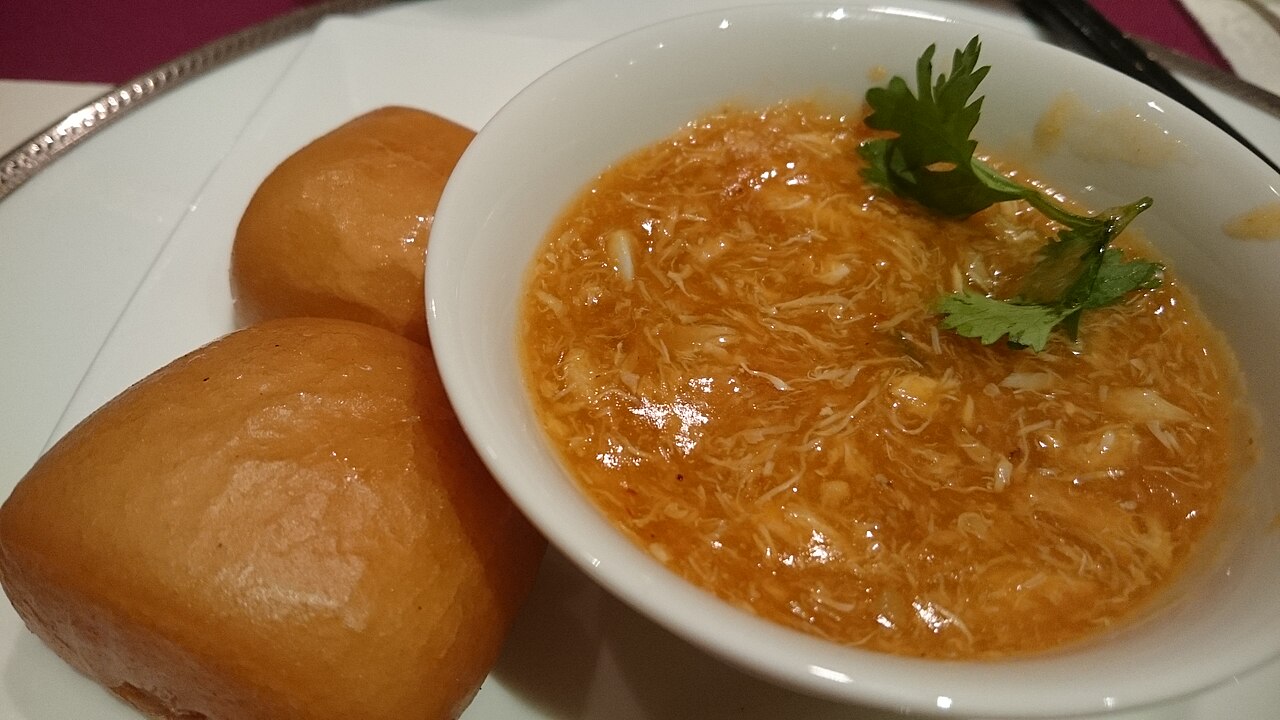
- Mantou is the sponge. For chilli crab, ask for fried mantou (golden bread rolls) on the side and dunk them into the leftover gravy — the best bite of the meal.
- Two crabs feed three to four. A typical mud crab dressed in sauce is 800g–1.2kg. Two crabs + 2–3 sides is a proper feast.
- Cash, card or PayLah! — most restaurants accept all. Service charge and GST are added on the bill.
Pricing reality check
Crab is priced per gram (usually market price, in the range of S$8–12 per 100g). A single mud crab is around S$60–120, depending on weight. A 4-person seafood dinner with two crabs, two sides and rice usually lands around S$50–80 per head at the well-known places. Mellben and No Signboard at Geylang are the cheaper end; Jumbo and Long Beach at East Coast are mid; Dempsey Hill outlets are the most expensive.
A crab night by MRT
- 6:00pm — Clarke Quay MRT → Jumbo Riverside Point for chilli crab and a riverside seat.
- or Bedok MRT + bus 401 → East Coast Seafood Centre for the classic seafood village.
- or Aljunied MRT → JB Ah Meng on Geylang Lor 21 for black pepper crab.
- or Ang Mo Kio MRT → Mellben Seafood for crab bee hoon and the heartland version.
Why GoBus SG helps here
The crab restaurants cluster in inconvenient places — East Coast Park is bus-only after dark, Geylang's restaurants are tucked down narrow lorongs, and the last bus from East Coast Park is earlier than you'd think. Live arrivals + the trip planner let you finish the mantou, glance at the widget, and walk out to a bus that's actually coming.
Open these stops in GoBus SG
Search any MRT or stop above for live arrivals across bus, MRT and LRT — with home-screen widgets and multi-modal trip planning.