If you only ate five dishes in Singapore, these would be the five. Each has a hawker centre or a single stall it's most associated with, each goes back a generation or two, and all of them cost under S$10. Singapore's hawker culture is UNESCO-recognised — the food is also just very good.
1. Hainanese chicken rice — the national dish
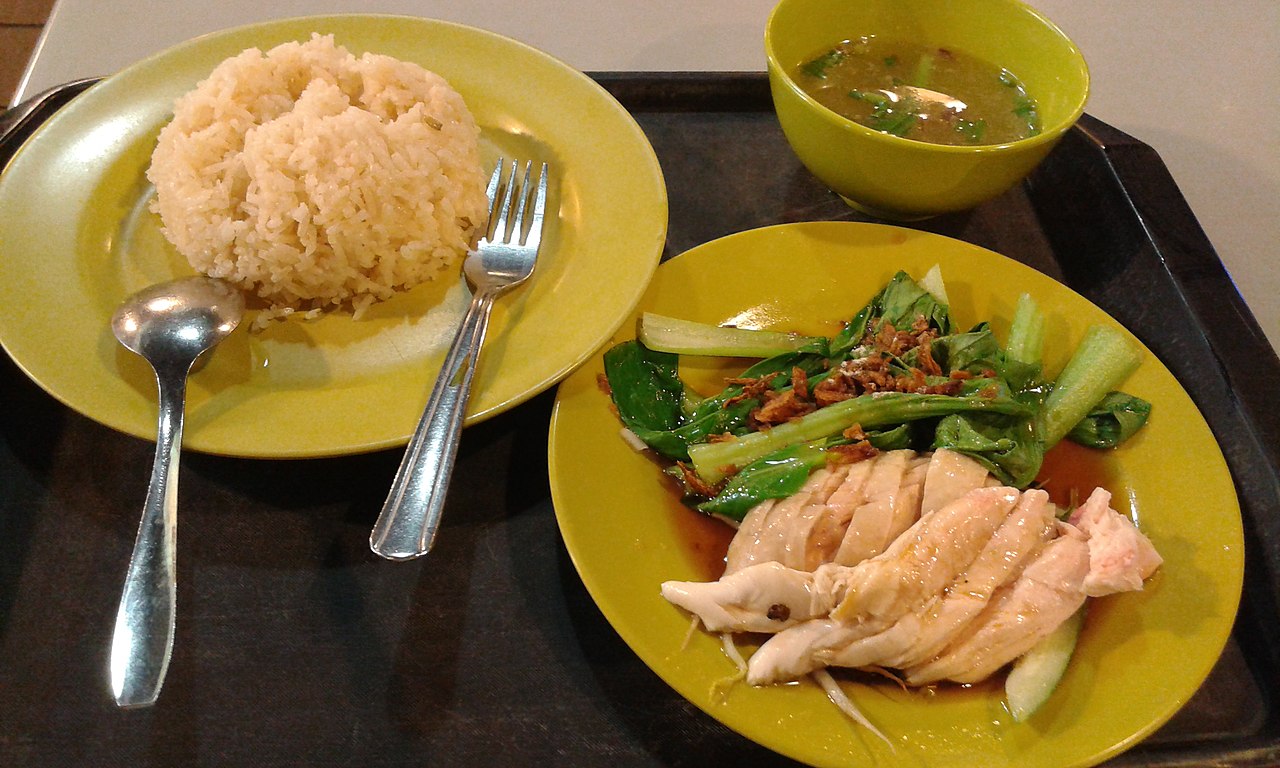
Cool poached chicken sliced over fragrant chicken-fat rice, served with three sauces: ginger-spring-onion, dark soy, and chilli. The judging criteria are unwritten but universal: the chicken should be just-set, never overcooked; the rice grains separate and glossy; the chilli sauce sharp enough to wake you up. Singapore-Cantonese origin from Hainan via the early 1900s; now the unofficial national dish.
Where to eat it:
- Tian Tian Hainanese Chicken Rice at Maxwell Food Centre — Anthony Bourdain made it famous; queue at lunch is real.
- Hawker Chan at Smith Street — the Michelin-recognised soya sauce chicken rice (different sauce, same idea).
- Yet Con on Purvis Street — the old-school sit-down version.
TE17 — Maxwell Food Centre is at the station exit.Chinatown MRT ·
NE4 / DT19 — for Hawker Chan on Smith Street and the Chinatown Complex Food Centre.
2. Bak kut teh — pork rib peppery soup
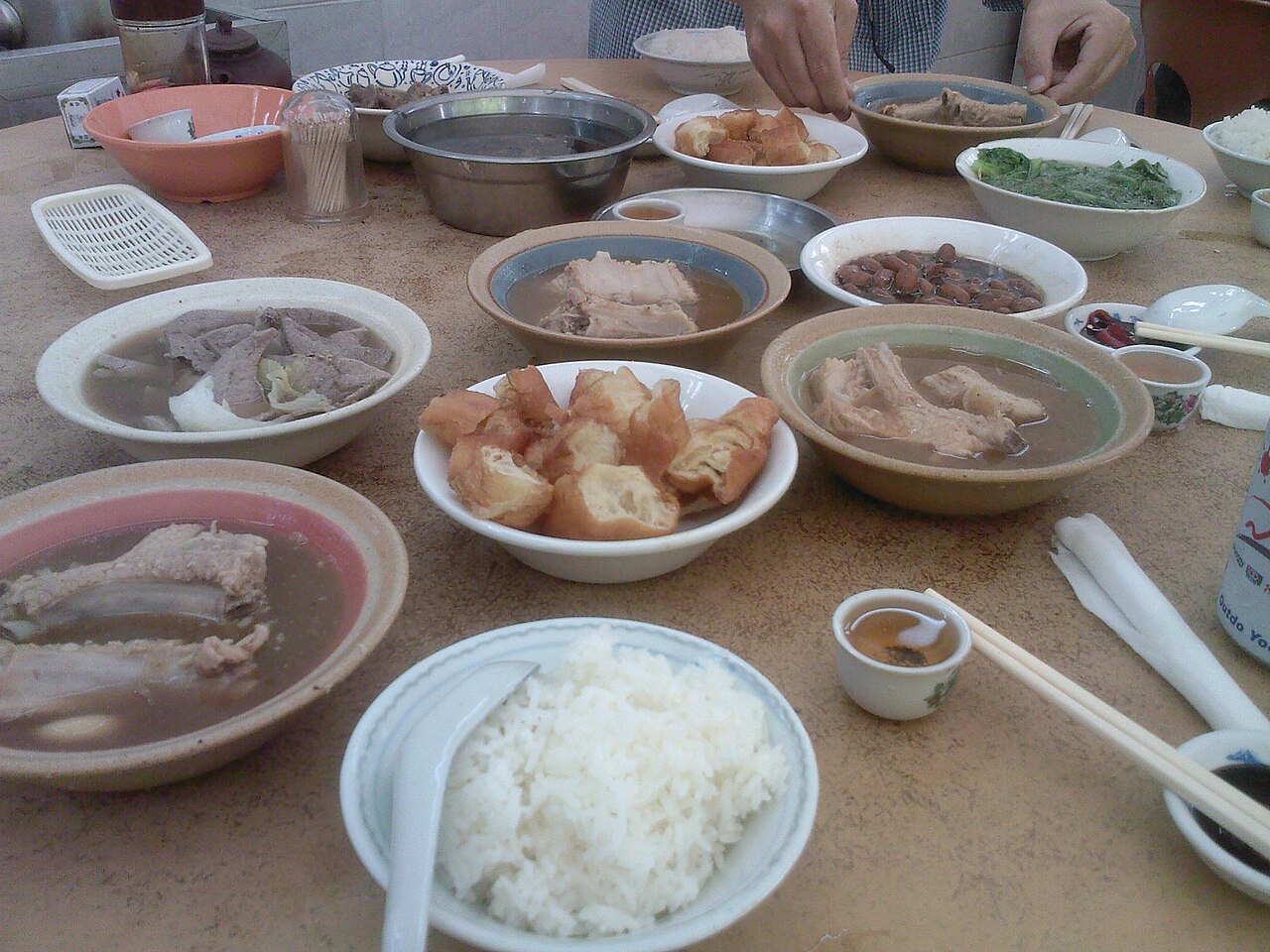
Bak kut teh means "meat bone tea" — pork ribs simmered for hours in a peppery, garlicky, slightly herbal broth, served with rice, dough fritters (you tiao) and pickled vegetables. Singapore's Teochew-style version is paler and more peppery than the Malaysian-Hokkien version (which is darker and herbal). Eat hot, wash down with tea.
Where to eat it:
- Founder Bak Kut Teh on Balestier — one of the most beloved old-school spots, open late.
- Song Fa Bak Kut Teh at Clarke Quay or Chinatown — the chain version, reliable.
- Outram Park Ya Hua Rou Gu Cha on Keppel Road — the 24-hour favourite of taxi drivers and night-shift workers.
NE5 — Song Fa New Bridge Road branch.Novena MRT ·
NS20 — closest to the Balestier bak kut teh strip.
3. Laksa — coconut curry noodle
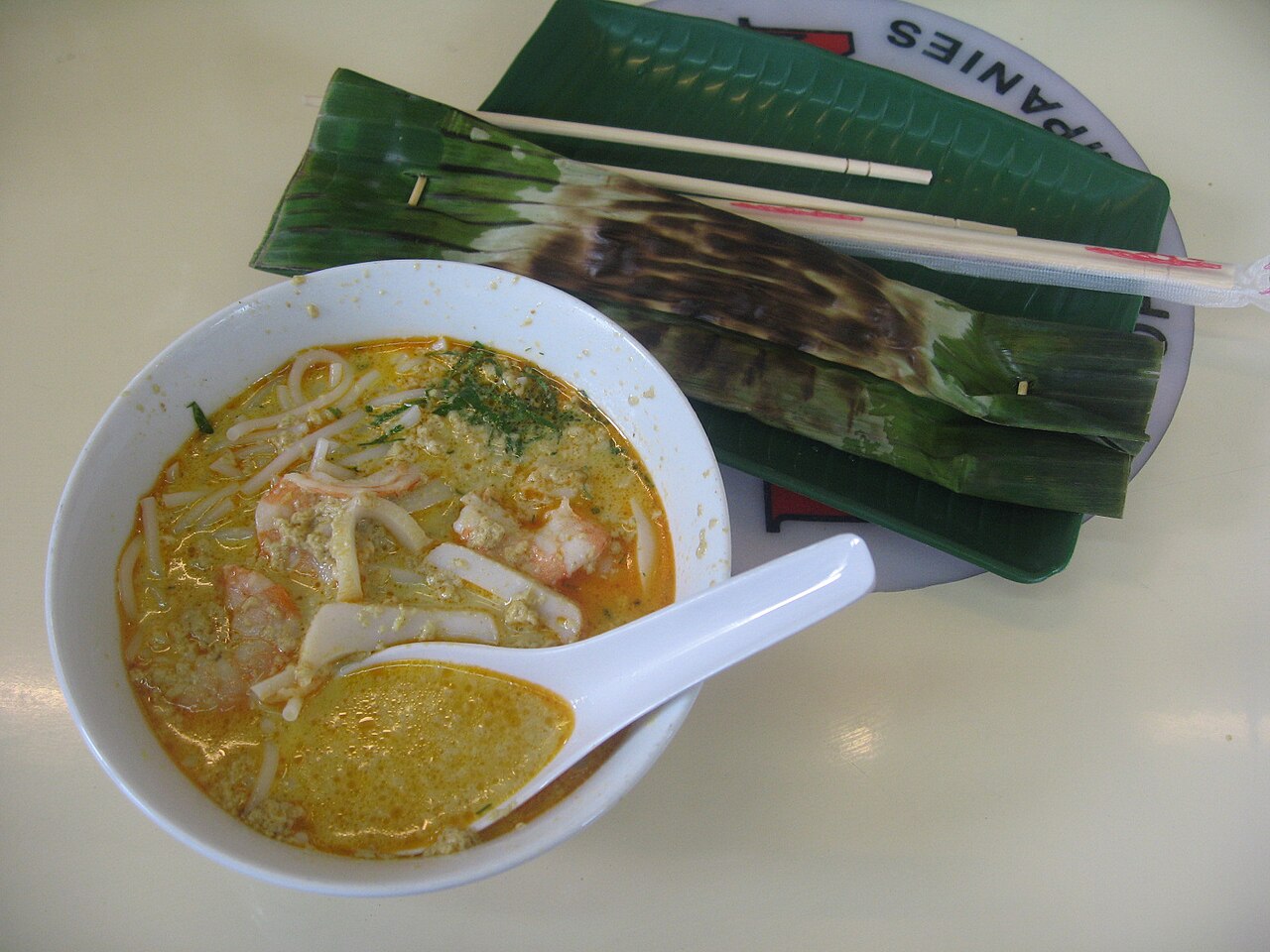
Katong laksa is the Singapore Peranakan version — thick rice noodles snipped into spoon-friendly lengths, swimming in a coconut and dried-shrimp broth thick with sambal, topped with cockles, prawns, fish cake and a generous spoonful of laksa leaves. You eat it with a spoon (no chopsticks, because the noodles are cut).
Where to eat it:
- 328 Katong Laksa on East Coast Road — the most famous Katong-style stall, the "won Anthony Bourdain" one.
- Sungei Road Laksa at the Jalan Berseh Food Centre — the classic charcoal-pot version.
- Janggut Laksa at Queensway Shopping Centre — old-school, generous portion.
CC8 — about 15 minutes' walk to the Katong laksa strip on East Coast Road.Jalan Besar MRT ·
DT22 — for Sungei Road Laksa at Jalan Berseh.
4. Char kway teow — the wok-charred classic
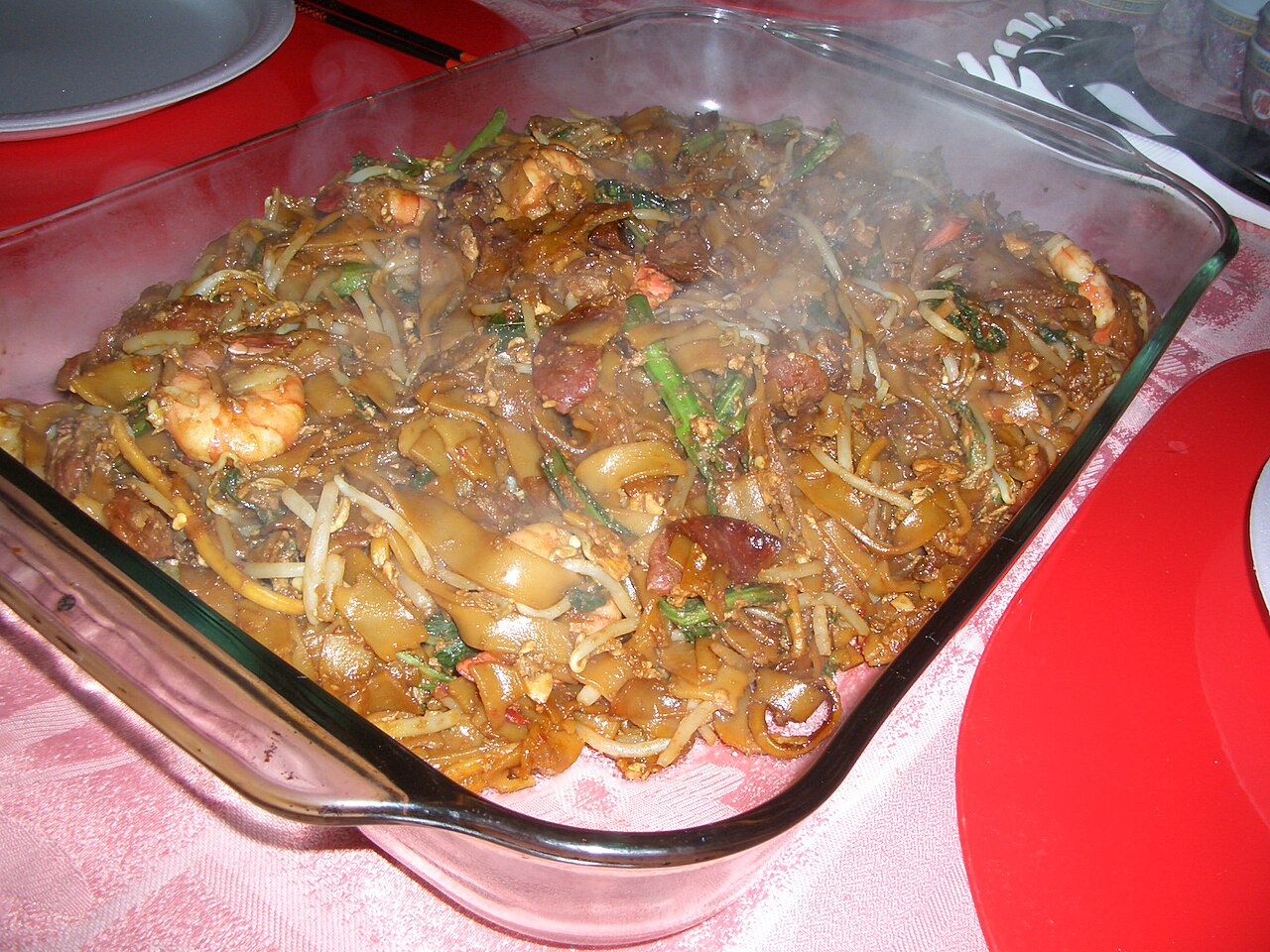
Char kway teow — flat rice noodles stir-fried hard over a screaming wok with dark soy, sweet sauce, Chinese sausage, cockles, prawns, egg, bean sprouts and chives. The signature is wok hei — the smoky, slightly singed flavour that only comes from a very hot wok and a confident hand. The classic plate is heavy on lard; ask for "less oil" if you want a slightly less aggressive version.
Where to eat it:
- Hill Street Char Kway Teow at Bedok South Market — arguably the most celebrated CKT in Singapore.
- Outram Park Fried Kway Teow at Hong Lim Market & Food Centre — uncle's been doing it since the 1970s.
- 91 Fried Kway Teow Mee at Golden Mile Food Centre — cheap, generous, late-night.
EW5 — about 10 minutes' walk to Bedok South Market.Chinatown MRT ·
NE4 / DT19 — Hong Lim Market & Food Centre is a short walk.
5. Satay — the smoke at Lau Pa Sat
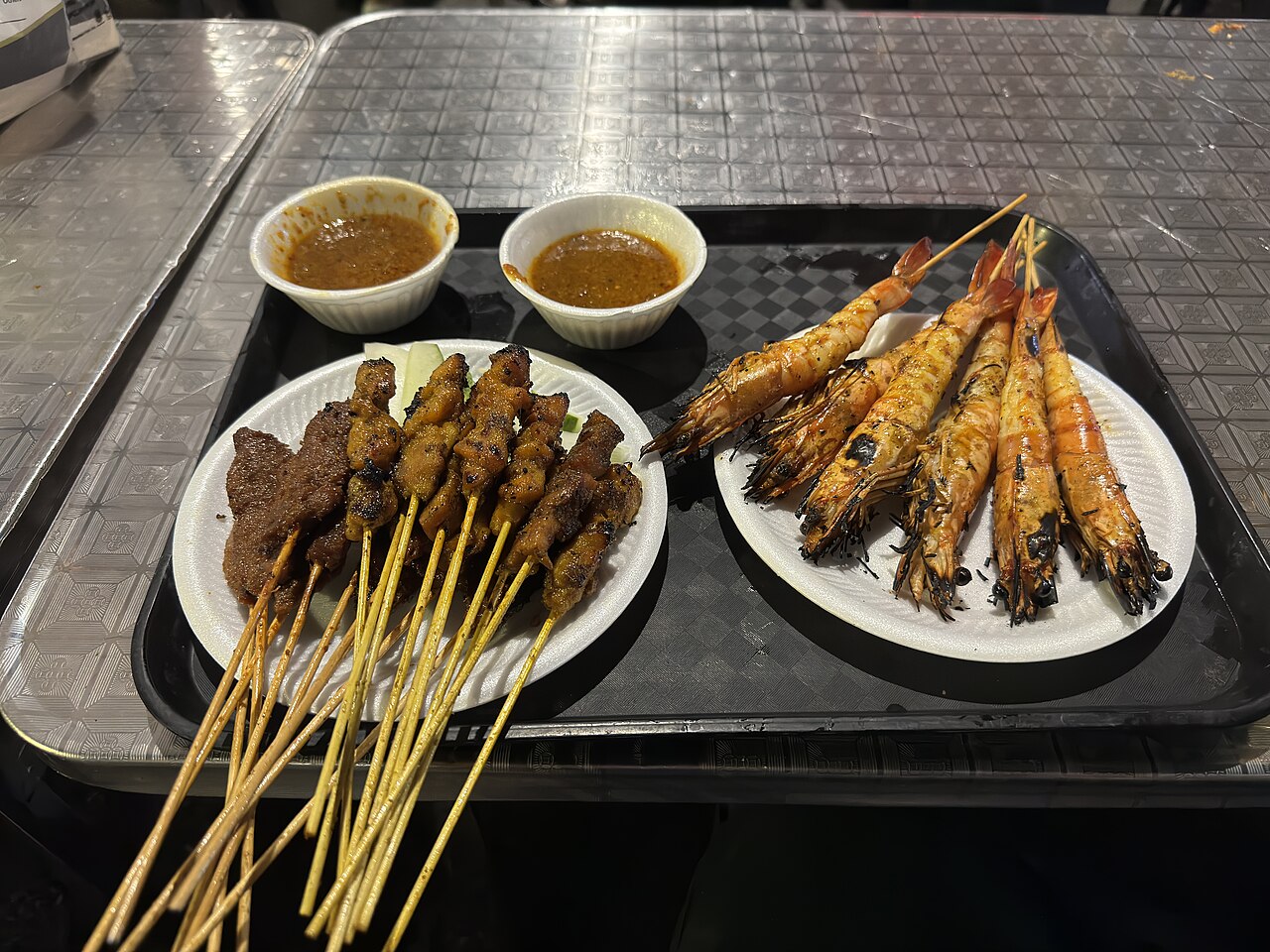
Skewers of marinated chicken, beef or mutton charcoal-grilled over open flames and dipped in a thick spicy peanut sauce, eaten with sliced cucumber, raw onion and pressed rice cakes (ketupat). The signature satay experience in Singapore is Satay Street outside Lau Pa Sat in the CBD — the road is closed to traffic every evening and grills are wheeled into the street with the smoke rising under the office towers.
DT18 — Lau Pa Sat is a 3-minute walk; Satay Street kicks off around 7pm nightly.Raffles Place MRT ·
NS26 / EW14 — alternative, similar walking time.
Order: 10 chicken, 10 beef, a portion of ketupat, an iced lime juice. Eat under the colonial cast-iron pavilion or on the closed street.
Hawker centre etiquette
- "Chope" a seat. Reserving a table by leaving a packet of tissues on it is a real Singapore custom. Order, then chope, in that order if you're alone.
- Cash is king. Many hawker stalls still don't take PayLah! or card. Bring small notes.
- Return your tray. NEA enforces a small fine for not returning trays at the designated stations — it's how the system stays clean.
- Watch the queue. The longest queue is usually the best stall — the locals know.
A five-dish day by MRT
- 11:30am Maxwell Food Centre — Hainanese chicken rice at Tian Tian.
- 1:30pm Train to Chinatown for char kway teow at Hong Lim Food Centre.
- 3:00pm A break at a Chinatown café with iced kopi.
- 5:00pm Train to Dakota for Katong laksa on East Coast Road.
- 7:30pm Train to Telok Ayer for satay at Lau Pa Sat's Satay Street.
- 9:30pm If you have room, bak kut teh at Founder on Balestier as a nightcap.
Why GoBus SG helps here
A hawker-hop day means lots of short MRT and bus hops between hawker centres — some of which are a 5-minute walk from the nearest station and others a 10-minute bus on top. Pin the four or five hawker centres as favourites; the home-screen widget will let you finish a bowl and walk straight to the next stop without an app session.
Open these stops in GoBus SG
Search any MRT or stop above for live arrivals across bus, MRT and LRT — with home-screen widgets and multi-modal trip planning.