If you want to understand how Singapore eats, skip the food courts for an hour and walk through a wet market. This is where uncles weigh out gula melaka by hand, where the fish on your plate at dinner was alive at 6am, and where Tamil, Malay, Hokkien and Cantonese vendors all stand within shouting distance of each other. Here are four of the most distinct — each a short walk from an MRT station.
What is a "wet market", anyway?
"Wet market" is the local name for a fresh-produce market — vegetables, fruit, meat, fish, dry goods — with concrete floors that get sluiced down with water (hence "wet"). Most are paired with a "dry" hawker centre upstairs or alongside, so you can shop downstairs, then sit down for breakfast a flight up.
Stop 1 · Tekka Centre — the most diverse market in town
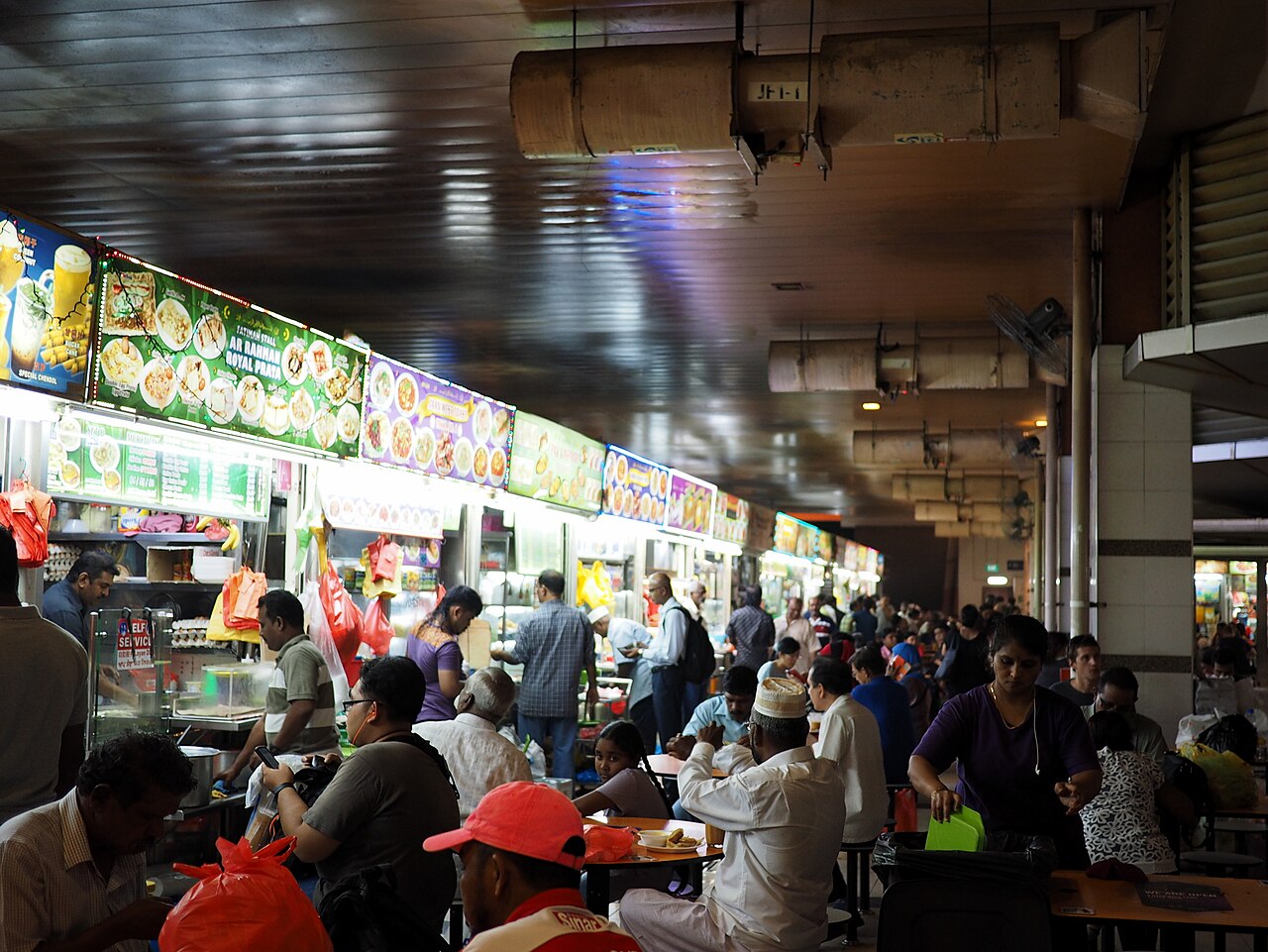
Tekka Centre, at the edge of Little India, is one of the most diverse markets in Singapore — freshly slaughtered halal mutton, banana leaves sold by the metre, mountains of ground masalas, dried anchovies, and live freshwater fish. Upstairs the hawker centre is famous for biryani, roti prata, and Indian-Muslim murtabak.
NE7 / DT12 — Exit C opens onto Bukit Timah Road, a 1-minute walk to Tekka's main entrance.
What to look for: cardamom pods by weight, fresh ground rasam powder, garlands of jasmine, Bengali sweets at the front stalls.
Stop 2 · Tiong Bahru Market — heritage Art Deco
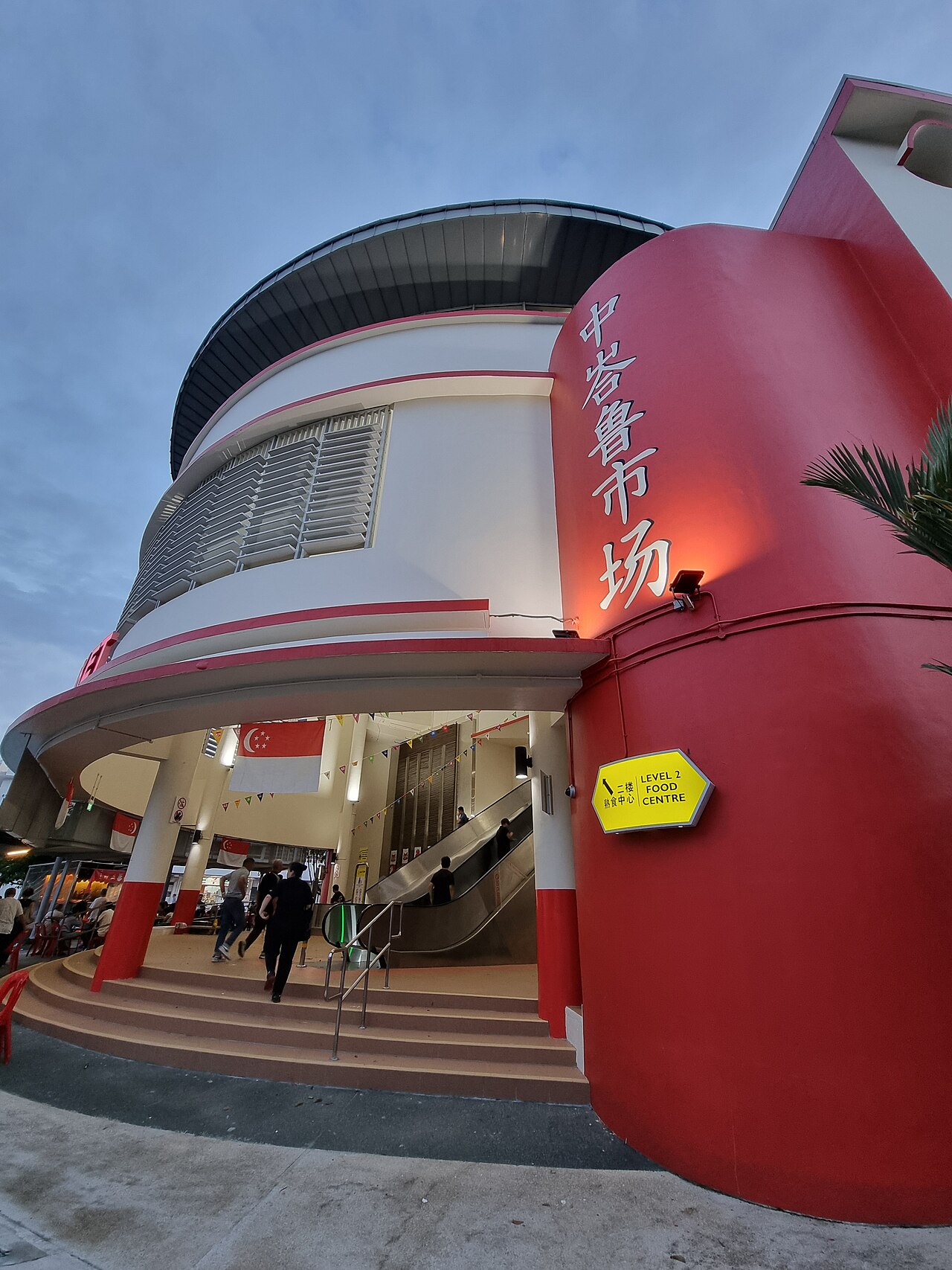
Tiong Bahru Market sits in one of the oldest housing estates in Singapore, built in the 1930s in clean Art Deco lines. The current market building was rebuilt in the 2000s but kept the curved roof and the centre courtyard. Downstairs is the wet market — quieter than Tekka, with a strong Hokkien/Teochew shopfront. Upstairs is the famous hawker centre with legendary chwee kueh, lor mee and chee cheong fun.
EW17 — 8-minute walk via Tiong Bahru Road, or use buses 16, 33, 63, 195 (search "Tiong Bahru Market" in GoBus SG).
What to look for: Teochew prawn paste, fresh dough for popiah skin, pandan-tied chee cheong fun, the upstairs queues at 7am.
Stop 3 · Geylang Serai Market — the Malay market
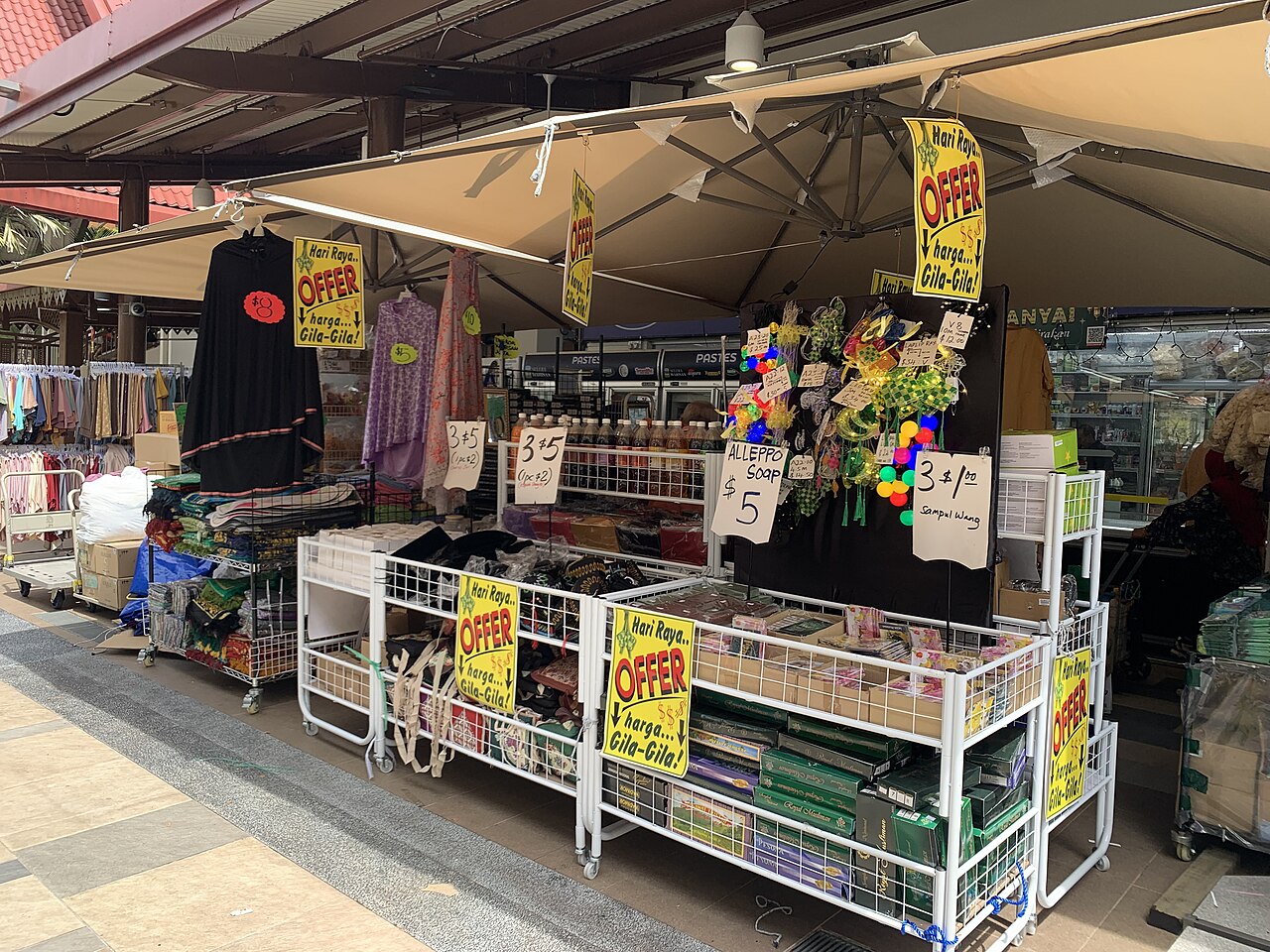
Singapore's flagship Malay-Muslim market sits in the heart of Geylang Serai. The building wears a stylised kampong roofline; inside, the wet market specialises in halal meats, fresh fish, sambal and chilli paste vendors, and Malay-style spice mixes (rempah). The upstairs has nasi padang, mee rebus, and one of the best laksa stalls in the east.
EW8 / CC9 — about a 10-minute walk along Sims Avenue. Eunos MRT · EW7 is the alternative.
What to look for: fresh sambal made the morning of, slabs of belacan, kaya in glass jars, Eid pop-ups during Hari Raya season.
Stop 4 · Chinatown Complex — the Cantonese kitchen
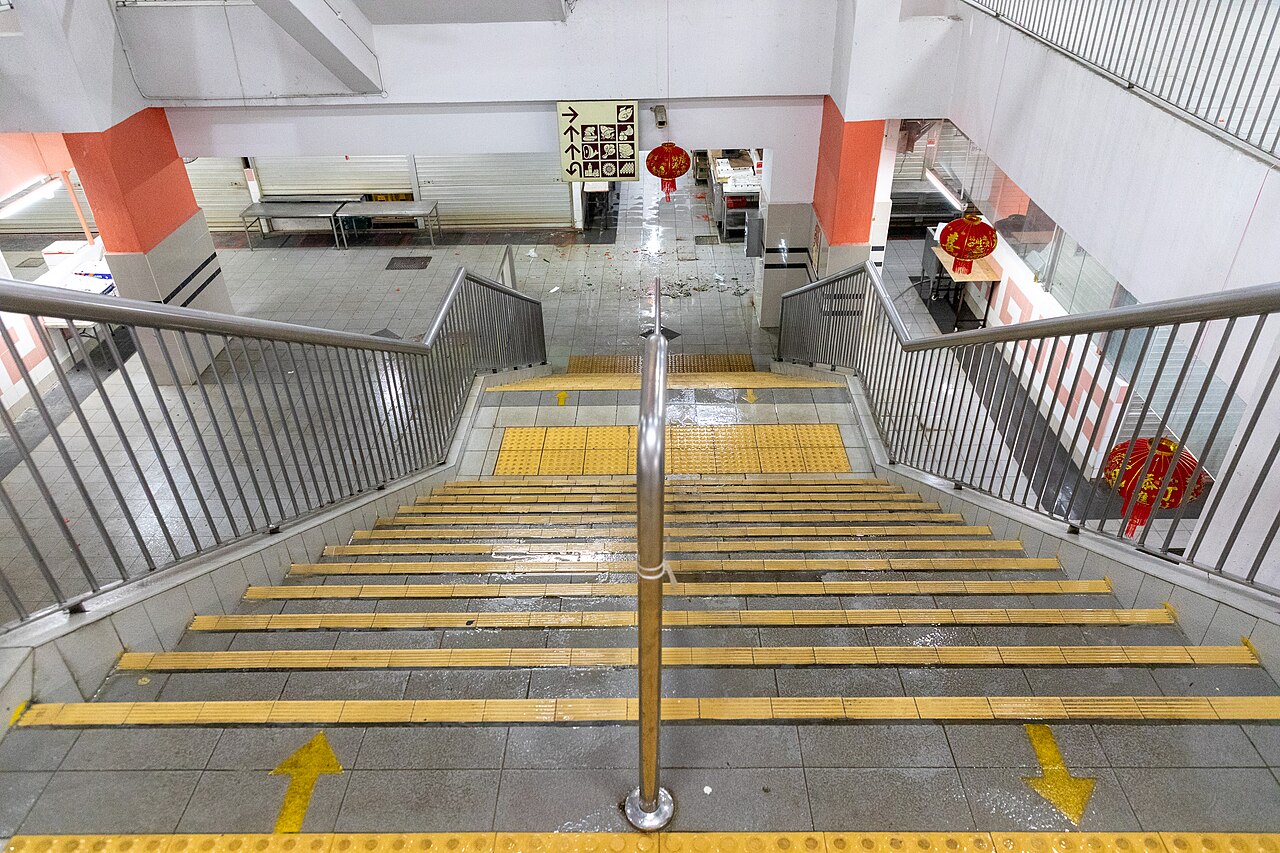
The Chinatown Complex on Smith Street holds Singapore's largest combined wet market and hawker centre. The ground floor is a maze of Cantonese, Hokkien and Teochew shopfronts: live grouper in tanks, dried scallop and abalone walls, preserved meats hanging from the rafters, and clean racks of leafy greens. Upstairs is a separate trip in itself — the Michelin-starred soya sauce chicken rice stall lives here.
NE4 / DT19 — Exit A then a short walk down Pagoda or Trengganu Street.
What to look for: dried shiitake mushrooms by the gram, fresh tofu, Chinese new year jellies and bak kwa stalls in season, the vegetable aunties who can tell you the steaming time for any green you point at.
Practical etiquette
- Cash. Many wet-market stalls don't take PayLah! or cards. Bring small notes — S$2, S$5, S$10.
- Bring a bag. Plastic bags are charged for, and your shopping won't fit in a back pocket anyway.
- Go early. 7–9am is peak freshness; by 11am the seafood stalls are packing up.
- Ask what's fresh. Wet-market vendors will often suggest the catch of the day or the in-season vegetable — ask.
- Watch your footing. The floors are genuinely wet. Closed-toe shoes you don't mind getting splashed are ideal.
A four-stop morning
You don't need to do all four in one day, but if you wanted to do a "kitchen of Singapore" loop:
- 7:00am Tiong Bahru Market for breakfast (chwee kueh, chee cheong fun)
- 8:30am Chinatown Complex — the largest selection, just downhill from Tiong Bahru via MRT
- 10:00am Tekka Centre for biryani or murtabak brunch
- 11:30am Geylang Serai for sambal and an afternoon kopi at the upstairs
Why GoBus SG helps here
Markets shift hours by day (some are closed on Mondays for cleaning) and the buses around Geylang Serai and Tiong Bahru get crowded once the lunch rush starts. Live arrivals in GoBus SG mean you can plan the next leg from your seat at the hawker centre — no need to leave the table.
Open these stops in GoBus SG
Search any station code or stop name above for live bus, MRT and LRT arrivals — with home-screen widgets and multi-modal trip planning.